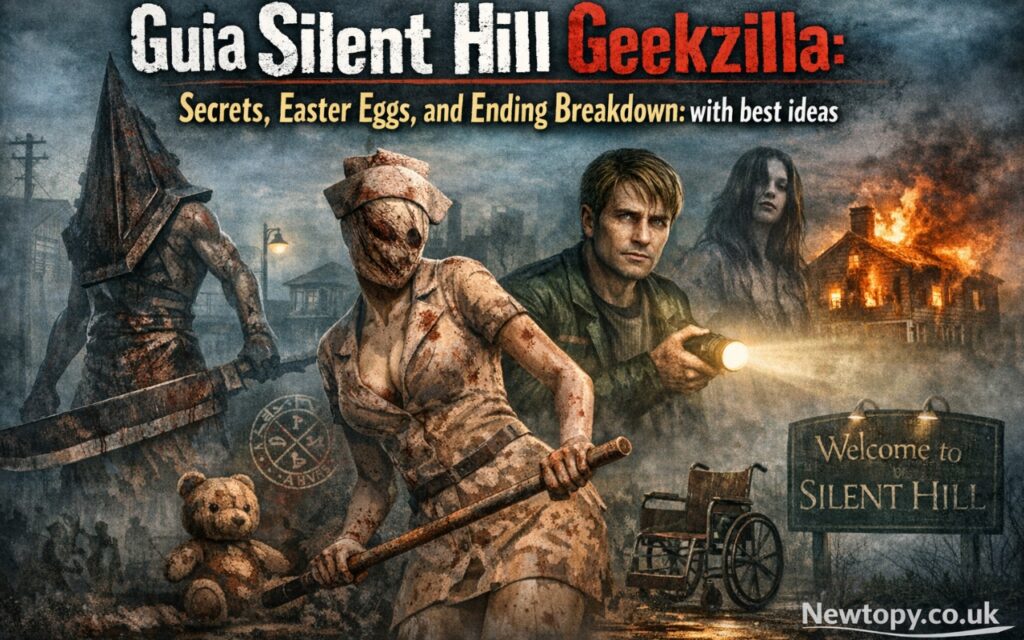

The Silent Hill series has always been more than just a survival horror game. It’s a psychological experience packed with symbolism, hidden meanings, disturbing imagery, and multiple endings that reflect the player’s choices. That’s why fans often search for a guia silent hill geekzilla—a detailed, fan-oriented guide that doesn’t just explain what happens, but why it happens. This article is written as a human-style, in-depth guide for players who want to truly understand Silent Hill beyond surface-level scares.
In this guide, we’ll explore the secrets, Easter eggs, lore connections, and ending breakdowns that define Silent Hill as a legendary franchise. Whether you’re a first-time player or a longtime fan revisiting the fog-covered streets, this guia silent hill geekzilla will help you uncover the layers hidden beneath the darkness.
Understanding the World of Silent Hill
Silent Hill is not just a town—it’s a manifestation of guilt, trauma, and suppressed memories. Unlike traditional horror games that rely on jump scares, Silent Hill uses atmosphere, sound design, and psychological tension to unsettle players. The fog, the radio static, and the unsettling silence all serve a narrative purpose. In the guia silent hill geekzilla, it’s essential to understand that the town reacts to the protagonist’s inner demons rather than functioning as a neutral setting.
Each version of Silent Hill—the Fog World, the Otherworld, and sometimes variations in between—represents different psychological states. The Fog World often symbolizes denial or confusion, while the Otherworld reflects raw trauma and guilt. This layered design is what makes Silent Hill so endlessly discussable and replayable. Geekzilla-style guides often focus on these interpretations because they elevate the experience from gameplay to storytelling.
Hidden Secrets Players Often Miss
One of the reasons the guia silent hill geekzilla is so popular among fans is the sheer number of secrets hidden throughout the series. Many players complete the games without realizing how much content they’ve missed. Silent Hill rewards curiosity—examining optional items, reading obscure notes, and revisiting locations can reveal new story details.
For example, subtle environmental clues like broken mirrors, graffiti messages, or oddly placed corpses often hint at the protagonist’s mental state. In some games, the way enemies behave or appear can change depending on player actions. These secrets aren’t always explained outright, which is why community-driven guides like Geekzilla interpretations are invaluable. They connect dots that the game intentionally leaves fragmented.
Symbolism Behind the Monsters
The monsters in Silent Hill are not random creatures—they are symbolic representations of fear, guilt, repression, and punishment. A strong guia silent hill geekzilla always dives deep into monster symbolism because it’s key to understanding the narrative. Nurses, mannequins, and distorted humanoid figures often reflect themes of vulnerability, shame, or trauma.
Perhaps the most iconic example is Pyramid Head. Rather than being just a villain, Pyramid Head represents punishment and self-inflicted guilt. His appearance and actions are deeply tied to the protagonist’s psychological struggle. Other monsters, like the faceless enemies or crawling figures, symbolize dehumanization and loss of identity. When viewed through this lens, Silent Hill becomes less about survival and more about self-confrontation.
Easter Eggs That Connect the Series
The Silent Hill franchise is filled with Easter eggs that link different games together. These small details reward long-time fans and help build a cohesive universe. A well-researched guia silent hill geekzilla highlights these connections, showing how recurring symbols, locations, and references tie the games into a shared mythos.
For instance, certain documents, cult symbols, and even character names appear across multiple entries. Radio broadcasts, posters, and background dialogue often reference past events without directly explaining them. These Easter eggs are easy to miss but add depth to the story. They also encourage theories and discussions within the fan community, which is why Silent Hill remains relevant years after its release.
The Role of Player Choices
One of Silent Hill’s most unique features is how player behavior influences the story. Unlike games that rely solely on dialogue choices, Silent Hill tracks subtle actions—how often you heal, how you interact with certain characters, and even how much damage you take. This system directly affects which ending you receive.
The guia silent hill geekzilla approach emphasizes that your playstyle reflects the protagonist’s mental and emotional state. Aggressive play, careful exploration, or emotional attachment to certain characters can all shape the narrative outcome. This design makes every playthrough feel personal, reinforcing the psychological themes that define the series.
Complete Breakdown of Silent Hill Endings
Silent Hill is famous for its multiple endings, each offering a different interpretation of the story. Some endings are hopeful, while others are deeply disturbing. A proper guia silent hill geekzilla doesn’t rank endings as “good” or “bad,” but instead explains what each ending represents.
The “good” endings often suggest acceptance, healing, or redemption. In contrast, darker endings reflect denial, obsession, or complete psychological collapse. Joke endings, which appear in some games, serve as meta-commentary and fan service, offering relief from the otherwise heavy tone. Understanding these endings transforms Silent Hill from a linear horror game into a psychological mirror reflecting the player’s journey.
Lore, Cults, and Religious Influence
Religion and cult activity play a major role in Silent Hill’s lore. The town’s dark history is closely tied to secretive cults, forbidden rituals, and twisted interpretations of faith. These elements add a layer of cosmic horror to the psychological narrative. A guia silent hill geekzilla often explores how these cults influence events without overshadowing the personal stories of the protagonists.
Rather than portraying religion as inherently evil, Silent Hill critiques blind devotion and extremism. The cult’s actions serve as a backdrop that amplifies personal suffering. This blend of personal and societal horror is what makes the lore so compelling and open to interpretation.
Sound Design and Psychological Impact
Silent Hill’s sound design is one of its most underrated strengths. The industrial noises, distorted music, and long stretches of silence are designed to create unease. In many cases, what you hear is more terrifying than what you see. The guia silent hill geekzilla perspective treats sound as a narrative tool rather than a background element.
Composer Akira Yamaoka’s music often shifts between melancholic and unsettling, reflecting emotional turmoil. The iconic radio static warns of danger but also heightens anxiety. These audio cues are integral to the experience, shaping how players emotionally respond to the environment.
Why Silent Hill Still Matters Today
Even years after its peak, Silent Hill continues to influence modern horror games, films, and storytelling. Its focus on psychological horror, symbolism, and player-driven narratives set a standard that many games still strive to achieve. The continued interest in guia silent hill geekzilla content shows that fans are still eager to analyze and reinterpret the series.
Silent Hill remains relevant because it doesn’t provide easy answers. It invites players to question what they see, feel, and experience. Each playthrough can reveal something new, depending on the player’s mindset and choices. That timeless quality is why the fog never truly clears.
Final Thoughts on Guia Silent Hill Geekzilla
The guia silent hill geekzilla is more than just a walkthrough—it’s a deep exploration of one of gaming’s most complex horror franchises. By uncovering secrets, understanding symbolism, and analyzing endings, players can fully appreciate the psychological depth that Silent Hill offers. This guide aims to help you see beyond the monsters and into the minds of the characters—and perhaps even yourself.